This year, OSI awarded more than $1.5 million to help advance new treatments for osteosarcoma.
Breakthroughs in understanding and treating osteosarcoma require bold questions, new ideas, and the determination to find answers. To support these efforts, The Osteosarcoma Institute (OSI) has awarded more than $1.5 million in research funding to four innovative projects for the 2024-2025 grant cycle.
This year’s projects take diverse approaches, which excites OSI Director Lee Helman, MD.
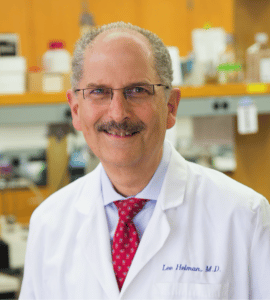
Lee Helman, MD
“I firmly believe that taking multiple shots on goal is essential if we want to make real progress for our patients and develop new treatments,” he says.
These investments come at a time when U.S. clinical research funding is significantly down.
“The overwhelming source of research funding in medical science is the National Institutes of Health. Those budgets have been significantly reduced, and some grants have been taken away,” Dr. Helman adds. “It is more important now than ever to try to find other sources of funding.”
With this cycle of funding, OSI is proud to help advance the science of osteosarcoma research by supporting the following four projects.
Reprogramming the Immune System to Fight Osteosarcoma
Principal investigator:John Maris, MD, Children’s Hospital of Philadelphia
Project title: Precision Cellular Immunotherapies for Osteosarcoma
Funding awarded: $500,000
Immunotherapy is a broad type of cancer treatment that uses the body’s own immune system to locate and attack cancer cells. That can mean boosting the immune system so it can better fight the cancer or creating new substances that work with it. Immunotherapy does not work in all cancers, though, and osteosarcoma historically has been resistant.
Chimeric antigen receptor (CAR) T-cell therapy is a type of immunotherapy designed to reprogram a person’s immune cells to fight cancer. The traditional method does not always work, because it relies on certain protein fragments appearing on the cancer cell’s surface. Successful immunotherapy depends on finding “targets” that the immune system can recognize.
Dr. Maris’s project aims to identify osteosarcoma surface molecules that could be attacked with a new class of CAR T-cell therapies. This approach pinpoints the protein fragments already displayed on tumor cells and engineers CAR T-cells to go after them directly, making treatment more precise. The strategy has already shown success in treating aggressive neuroblastomas in children. For osteosarcoma, researchers have identified several promising targets on tumor cells, offering fresh hope where standard CAR T therapy has fallen short.
John Maris, MD
Alejandro Sweet-Cordero, MD
Activating the Body’s Natural Killer Cells
Principal investigator:Michel Duval, MD, Centre Hospitalier Universitaire Sainte-Justine
Project title: Beyond Interferon Alpha: Targeted Delivery of Multiple Cytokines by Specialized Interferon-Producing Cells to Prevent Osteosarcoma Relapse
Funding awarded: $125,000
The human body has two main types of immune defenses: the innate and the acquired immune system. The acquired system is the part that learns to recognize and fight off specific viruses or bacteria, either after a vaccine or direct exposure. The innate system, on the other hand, is the body’s built-in first line of defense. It includes natural killer (NK) cells, which can help spot and destroy cancer cells.
NK cells should be able to identify the abnormal osteosarcoma tumor cells, and Dr. Duval has developed an innovative treatment called ThINKK (Therapeutic Inducers of NK cell Killing), which strengthens NK cells’ ability to attack cancer. In early studies, his team found that ThINKK injections could prevent childhood leukemia from coming back, and now they are testing whether the same approach could help people with osteosarcoma.
Michel Duval, MD
Ryan David Roberts, MD, PhD
Using Machine Learning to Predict Effective Treatments
Project title: A Biologically Informed Response Predictor for Kinase Inhibitors
Funding awarded: $499,990
One possible treatment for osteosarcoma is tyrosine kinase inhibitors (TKIs), a class of targeted cancer drugs. TKIs block enzymes called tyrosine kinases, which are often overactive in cancer cells. By shutting down these signals, TKIs can slow or stop cancer cell growth and division.
While TKIs can help, their results are inconsistent, and it is hard to know which drug will work best for each patient. One reason is that TKIs often target multiple kinases simultaneously and can affect both cancer and healthy cells.
Dr. Roberts uses machine learning to identify patterns of cancer-promoting cell-cell signaling established within individual tumors. Then, he plans to develop software that acts like a matchmaking service, analyzing a patient’s tumor tissue sample to identify networks of cell-cell interactions, then using this information to determine the TKIs that will effectively treat that patient’s cancer. By personalizing treatment in this way, patients may respond better and sooner.
Slowing the Growth of Cancer Cells by Targeting Telomeres
Principal investigator:Hilda A. Pickett, PhD, Children’s Medical Research Institute and the University of Sydney
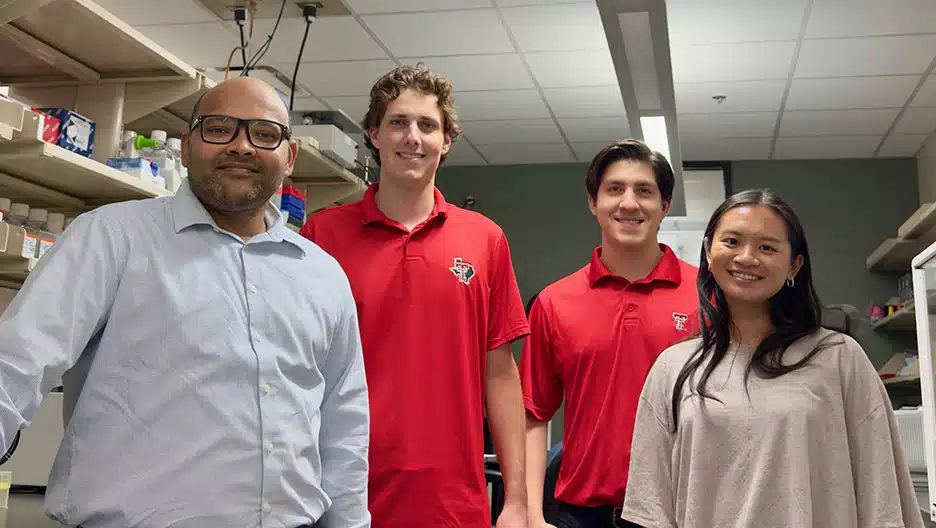
Co-Principal investigator:Balakrishna Koneru, PhD, Texas Tech University Health Sciences Center
Project title: Targeting Telomeres for the Treatment of Osteosarcoma
Funding awarded: $438,098
Telomeres are repetitive DNA sequences found at the ends of chromosomes (the structures inside the nucleus of cells that carry our DNA). As cells divide, telomeres get shorter. When they become too short, the cell usually dies. Cancer cells avoid death by maintaining their telomeres so they can keep dividing.
To do this, cancer cells either activate an enzyme called telomerase or use a process called alternative lengthening of telomeres (ALT). More than 60% of osteosarcomas rely on the ALT pathway, yet there are currently no treatments designed to target ALT-positive cancers.
Professor Pickett has identified a protein that is toxic to ALT-positive cancer cells and could serve as the basis for a new therapy. This project will evaluate the protein in laboratory mice to confirm whether it is effective and well tolerated. If successful, this work could be a pathway to the development of a variety of drugs to treat osteosarcoma.
Hilda A. Pickett, PhD
Balakrishna Koneru, PhD
Pushing Osteosarcoma Research Forward
OSI is committed to exploring various treatments for osteosarcoma with our 2025 funding, which includes the four new projects in our osteosarcoma research portfolio, and the newly launched $15 million, four-year Break Through Cancer initiative.
More osteosarcoma research projects are in the pipeline that will be announced soon. Together, this expanding portfolio offers promise and hope for osteosarcoma patients.
If you are interested in co-funding research with OSI, please donate online or email giving@osinst.org.
Sign Up to Receive The Frontline
Stay informed as we work to identify new treatments for osteosarcoma.
Christina Curtis, PhD, MSc, a leader in cancer genomics at Stanford University, is applying her AI-driven research approaches that advanced breast cancer understanding to uncover osteosarcoma’s origins and new perspectives on therapy.
Advances in genetic sequencing and unprecedented collaboration among research institutions are helping scientists better predict prognosis, track treatment response, and move closer to personalized therapies for osteosarcoma.
No results found.
Your donation provides immediate and long-term support to osteosarcoma patients.