Stories of progress, inspiration, and information in overcoming osteosarcoma.

Sister and brother Lizzy and Daniel Wampler

When a Loved One Is Diagnosed with Osteosarcoma: 9 Ways You Can Help

Patients, caregivers, and siblings share what to say, what to avoid, and how to help someone facing an osteosarcoma diagnosis.

When a friend or loved one is diagnosed with osteosarcoma, you want to be there for them. But it’s not always easy to know what to say or do. Here, people whose lives have been impacted by osteosarcoma, including a survivor, a sibling, a caregiver, and a parent, share what helped most.

1. Be Their Advocate

Emotions can make it hard for patients and family members to take in medical information. Offer to come along to appointments or to be there when doctors are delivering news.

Denise Clemence stepped in and helped care for her cousin, Monique Manna, when Monique faced osteosarcoma as a single mom of six, with two children still at home. “You need to be the listener,” Denise says. “Take the notes, so that when it comes time, you can remind the patient of what was really said.”

It can also help to do online research or check medical claims for accuracy, so patients and families don’t go down rabbit holes of misinformation.

2. Get Specific About Helping Out

Instead of saying, “Let me know if you need anything,” offer to help with specific chores, like meals, laundry, childcare, house cleaning, or errands. If a patient’s home needs modifications to adapt to a wheelchair or a first-floor bedroom, volunteer to vet contractors or help with set-up.

3. Take Charge of Communication

Responding to all the well-meaning calls and texts asking about treatment and tests can be draining for a patient or parent. Ask if they would like you to be the point person, or if you can help lighten that load.

What that looks like can vary. For Carly Crockett, who was 28 when she was diagnosed with osteosarcoma, it meant having her mother field individual questions.

Leslie and Eric Bartel chose to post a weekly video on Facebook to update everyone after their daughter, Annabelle Grace (AG), was diagnosed with osteosarcoma in her arm.

4. Keep Things as Normal as Possible

Familiar activities and conversations can give a patient a break from thinking about cancer. Daniel Wampler, who was just 11 when his sister Lizzy battled osteosarcoma, would play video games and cards with her. “I would show her glimpses of my world as well,” he says.

Similarly, Carly was grateful for friends who called to chat, rather than to ask about how her treatment was going. “They would make me laugh. That was everything, to just feel normal,” she says.

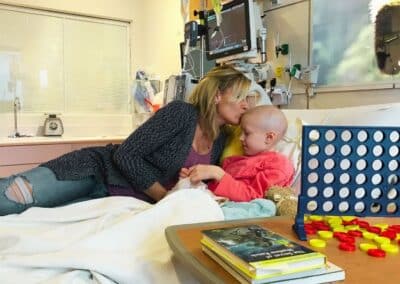
The Bartels created themes for AG’s check-ups and decorated her hospital room, creating fun moments to keep her spirits lifted and to keep her fighting.

“[My friends] would make me laugh. That was everything, to just feel normal.” —Carly Crockett

5. Offer Gifts and Distractions

Gifts don’t have to be expensive. Daniel says his sister liked anti-anxiety toys like slime and stress balls, along with hats and makeup that helped her cope with hair loss.

Carly appreciated having things to do. For example, a college friend asked her to edit his papers, which made her feel like she could still contribute.

6. Pitch In, If You Can

Osteosarcoma can create a financial burden and caregiver burnout. Patients and their families may travel for care, and caregivers may have to cut back their work hours or stop working altogether. Donations or gift cards can help ease that weight.

7. Let Them Feel What They Feel

It’s natural to want to make your loved one and their family feel better. But there will be days when they’re exhausted or angry, and that’s okay.

“Sometimes the best thing you can do is let a patient sit with it,” Carly says.

8. Find an Outlet for Your Fear

You might feel deep fear or grief when a loved one is suffering. Finding another place to express those feelings, rather than leaning on the patient, can help them feel less responsible for holding you up while they’re also holding themselves up.

“You need to absorb your feelings and their feelings,” Denise says. “Just absorb it all. You can cry after, in the elevator or on the drive home from the hospital.”

Carly knew her mother was afraid for her, “but she was able to put on a strong face,” she says. “Around me, she was strong. She was confident.”

9. A Few Things That Can Land the Wrong Way

Even the most well-meaning words and gestures don’t always land the way we hope.

  • Comparisons can be tricky. Carly pointed out that rotator cuff surgery isn’t really comparable to the shoulder replacement and repair involved in her osteosarcoma treatment, and mentioning someone you know who faced a different type of cancer may not feel as relatable as it’s meant to.
  • “You are so strong” can be a lot to carry. It comes from a good place, but it can leave a patient or family member feeling like they need to act brave, even on the days they don’t feel that way.
  • Staying present matters. It’s natural to feel unsure of what to say or do. But stepping back can leave a patient or family member wondering why, and make them question where they stand with you.

No one gets it perfectly right, and that’s okay. What matters most is showing up. It reminds someone facing osteosarcoma that they are not going through it alone.


This article was produced with support from United Therapeutics. The views expressed are those of the authors.

Sign Up to Receive The Frontline

Stay informed as we work to identify new treatments for osteosarcoma.

We never sell or share your information.

Contact Information

More On This Topic

No results found.

Your donation provides immediate and long-term support to osteosarcoma patients.