Funding Fuels Collaboration
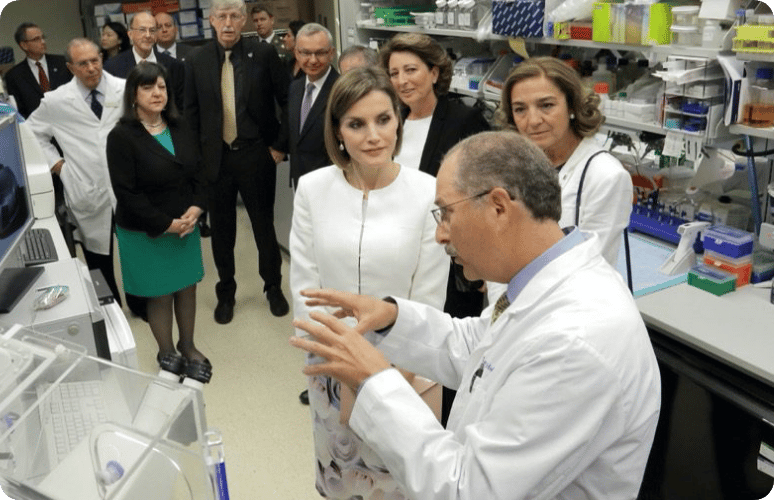
To get the initiative off the ground, researchers on the Defying Osteosarcoma TeamLab spent eight months on project development, building a proposal for a four-year program of work combining resources, data, and expertise. The collaboration brings together more than 20 researchers from eight institutions, and notably, the project makes a point of bringing junior researchers into the fold, positioning them to grow into leadership roles and provide fresh energy to the research.
“What Break Through Cancer is doing well is uniting a diverse group of people, with different experiences across different institutions and different skill sets,” says Amy LeBlanc, DVM, director of the Comparative Oncology Program at the National Cancer Institute and a member of the Break Through Cancer team. “Break Through Cancer has representation from lots of different corners of the osteosarcoma spectrum.”
The project launched in September 2025 due in part by funding from OSI. Beyond providing financial support, Break Through Cancer manages the complex operational infrastructure that enables researchers across institutions to work together efficiently so scientists can focus on accelerating discovery.
The team calls their approach a “radical collaboration,” emphasizing that by working together, instead of in isolated silos, they can find breakthroughs faster.
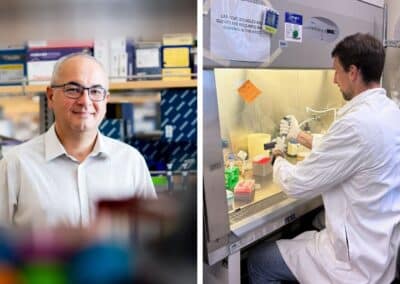
“There’s an expectation that every voice counts and every opinion should be heard,” says Cheryl London, DVM, PhD, veterinary medical oncologist, professor of comparative oncology at the Tufts Cummings School of Veterinary Medicine, and a member of the Break Through Cancer team. “The goal is to prioritize the science.”
Why Dogs Accelerate the Science
Because osteosarcoma is so common in dogs, researchers can study response of this cancer to a variety of different treatments very quickly. Importantly, these drugs can be studied in previously untreated osteosarcoma, which is difficult to do in human patients.
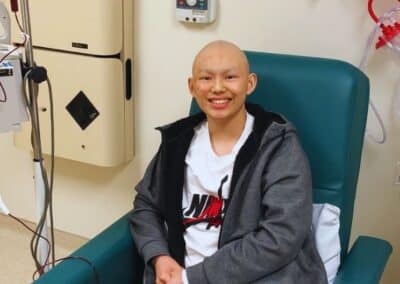
“The goal is to use this cross-species approach to find the relevant points of therapy that can be leveraged to improve outcomes, particularly for kids who fail therapy early or who present with spread of disease,” Dr. London says.
Not all osteosarcoma cases are alike. Researchers are testing molecularly guided therapies, including antibody-drug conjugates that target tumor cell surfaces and DNA damage response agents that disrupt genomic repair pathways in cancer cells.
Studying dogs helps researchers learn how promising treatments perform in human patients. When responses differ between dogs, the team finds out why and gathers insights to help guide the next phase of research. This process supports the development of treatment strategies to help both dogs and children.
“It is challenging to do these sort of rapid screening studies in humans,” Dr. London says.
Crucially, the trials are designed so the dogs are not harmed. Owners who enroll their pets understand the treatment may not help their own dog, but it may help someone else’s dog or someone’s child. Researchers monitor each dog’s quality of life, and participants can withdraw at any time.