Clinical Trials: What Osteosarcoma Patients Need to Know
With clinical trials, new treatments move from research to real life. Here is how to decide if they are right for you.
People with osteosarcoma and their families face many challenging treatment decisions, including whether or not to participate in clinical trials and which one is the right fit.
Here, J. Andrew Livingston, MD, a clinician and researcher in sarcoma medical oncology at UT MD Anderson Cancer Center and a member of The Osteosarcoma Institute (OSI)’s strategic advisory board, explains how treatments move through the clinical trial pathway, and what each phase may mean for patients and their families.
The Phases of Clinical Trials 1–3
Clinical trials for osteosarcoma typically move through three phases:
Phase 1: These are the earliest trials in developing a new treatment. They may test potential treatments, like new medicines, to verify that they are safe and determine effective dosages. Often these trials may include patients with many different types of cancer or may include patients based on certain markers, such as DNA changes or protein levels, in their specific tumor.
Phase 2: These trials focus on how well a treatment works for a specific cancer. They may test medications that have finished phase 1 testing, or medications that have been approved for other types of cancer but are not yet approved for patients with osteosarcoma.
Phase 3: These trials may compare a new treatment to a standard treatment to see if it works better. They usually include a larger number of patients than phase 1 or 2 trials. Treatments that pass phase 3 may become FDA-approved options.
Benefits and Risks of Clinical Trials
The main benefit of a clinical trial is gaining access to a new medication or treatment that would not otherwise be available. These new options are usually provided at no cost.
Many people also find it meaningful to participate in a clinical trial because they know they are helping others with osteosarcoma.
“Clinical trials are how we move the field forward, learn about new treatments, and get drugs approved. There is also an important altruistic benefit,” Dr. Livingston says.
Many of the risks of clinical trials are specific to the treatment being tested, and doctors review them with patients and families.
J. Andrew Livingston, MD
Choosing a Clinical Trial for Osteosarcoma
Most people with osteosarcoma face limited treatment options.
“Anytime you are at a treatment decision point, it is a good time to ask what standard treatments and what clinical trials are available,” Dr. Livingston says. “Because osteosarcoma is so rare, I encourage patients to participate in clinical trials. One reason is to find the best treatment. The second is that, hopefully, it can also help other kids and families in the future.”
If you are considering clinical trials, he recommends prioritizing those that are specifically studying osteosarcoma, since it is a unique cancer in terms of how it is treated.
Patients who have osteosarcoma that comes back after standard treatments like MAP chemotherapy may want to consider trials based on tumor biology, which look at the DNA and RNA of the cancer.
Phase 1 trials can be attractive for patients who have had multiple prior osteosarcoma treatments, since these trials may offer access to something new and innovative.
“But we have to balance that. We are just learning how these treatments work in patients,” Dr. Livingston says.
On the other hand, trials that are further along typically have more data to support them.
Other Factors to Consider in Clinical Trial Selection
“It is really important, when you are considering a trial, to understand if it is something you could commit to,” Dr. Livingston says.
Location and Travel. Consider where the clinical trial is located and how much time you would need to spend there. Some trials may cover travel costs, hotels, parking, and meals. Others may allow you to have some visits virtually or with your primary oncologist, so you do not have to travel as often.
Structure. Clinical trials are structured in different ways.
In some trials, everyone gets the same treatment.
In randomized trials, some patients get an experimental treatment, and others get a standard treatment.
In crossover trials, if a patient is assigned to the standard treatment and it is not working, they can cross over to the experimental trial.
Placebo-based trials compare a treatment to a control group that does not get the treatment. These are less common.
Knowing what type of treatment the trial offers can inform your decision.
“Anytime you are at a treatment decision point, it is a good time to ask what standard treatments and what clinical trials are available.” —J. Andrew Livingston, MD
Decide as a Family
Many osteosarcoma patients are under age 18, which is the age of consent for medical treatment. Still, it is important for younger patients to understand the pros and cons of their treatment options.
With a process called assent, teenagers under age 18 can participate in shared decision-making and agree to their treatments.
“Often, teenagers want to participate in clinical trials. They are looking for something new or different, and they also want to help others,” Dr. Livingston says.
Questions to Ask About Clinical Trial Participation
If you are thinking about participating in a clinical trial, Dr. Livingston recommends asking your care team these questions:
Why do you think this trial is the best option for me?
If I do not participate in this trial, what are my options?
What would be expected of me as a participant?
Are there other trials outside of this center that would be a good fit?
“As clinicians, we are typically weighing things like past treatments, patient preferences, blood counts, and where the osteosarcoma is located, for example,” he says. “But sometimes, we are not good at communicating that and explaining why we are recommending a specific trial.”
How to Find Osteosarcoma Clinical Trials
It can be hard to find reliable information about clinical trials. Your care team is likely familiar with trials at their center, and trials that are specifically studying osteosarcoma treatments.
To find information about other trials, you may want to turn to:
Surgery to remove a primary tumor, or any cancer that has spread to the lungs, requires decisions that shape a patient’s entire life. Leading orthopedic and surgical oncologists explain the options and how to determine the right choice.
The Defying Osteosarcoma TeamLab is studying osteosarcoma in dogs and people with the goal of uncovering breakthrough treatments for this deadly disease.
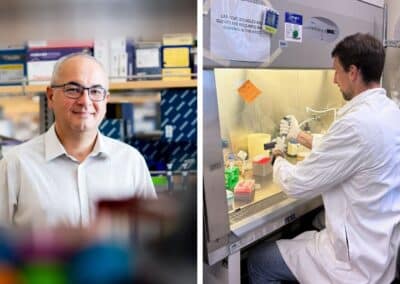
With seed funding support, The Osteosarcoma Institute is bringing two research teams together to better understand the biology of osteosarcoma and find new treatment solutions.
No results found.
Your donation provides immediate and long-term support to osteosarcoma patients.