Funding Impactful Research
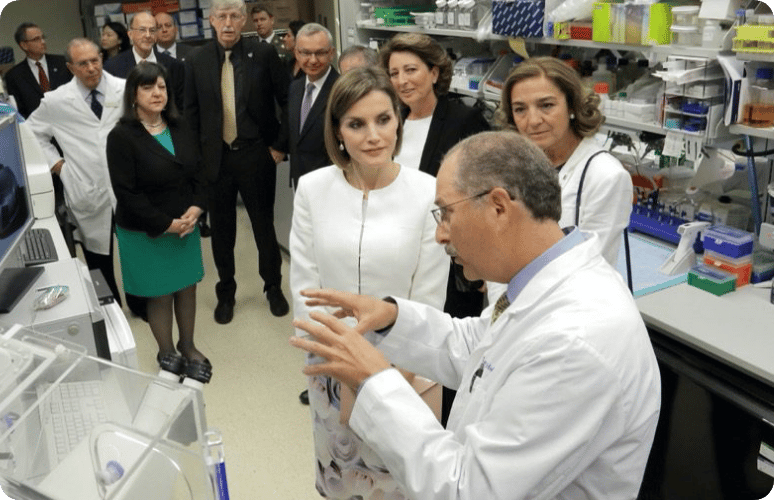
For the past six years, OSI has committed over $11.2 million to osteosarcoma research across 23 multi-year translational research projects and clinical trials. Each year, OSI continues to identify new projects through a rigorous review process focused on high-potential opportunities.
“Because we have been around long enough, some of the strongest proposals we funded have been amplified,” says OSI DIrector Lee Helman, MD. “Investigators achieved the results they were aiming for, which then positioned them to secure additional funding from sources like the National Cancer Institute.”
Last year, OSI received 38 research proposals and selected four projects for funding during the 2025 grant cycle.
Leading the Way with Targeted Research
OSI is using its position and expertise to proactively shape the osteosarcoma research agenda, a significant milestone in the organization’s growth and maturity.
“With guidance from our Strategic Advisory Board, OSI’s research portfolio increasingly includes targeted research projects focused on the most promising opportunities and the most critical unanswered questions that are slowing progress,” says OSI President Mac Tichenor.
The first scientific symposium convened by OSI focused on the chaotic nature of the osteosarcoma genome and its implications. As a result of this meeting, OSI is now funding a new collaboration between researchers at two leading cancer centers to identify weak points in osteosarcoma created by its unstable genetic makeup.
A second meeting centered on the osteosarcoma “surfaceome” (the collection of proteins on the surface of cancer cells) to identify new ways to recognize and attack tumors. Additional meetings are planned for 2026 and 2027 as OSI continues to shape high-impact osteosarcoma research.
Additionally, while targeted research allows OSI to strategically help move the field forward, it remains essential to issue calls for new ideas. In 2025, the institute launched a new High-Risk, High-Impact grant category.
“If you have a really good idea that, if proven, could open an entirely new area of research to pursue, we want to hear it,” Dr. Helman explains. “Submit a short proposal. We will follow the work for a year to see if it has the potential to open a new field. If we see something novel and compelling, we are willing to take a chance.”